How to manage floats in stranded knitting
A float is the unused yarn carried across the wrong side between stitches of its color. It needs enough length for the fabric to spread comfortably, but a long, unsecured strand can catch on fingers or jewelry. Good float management combines even tension, sensible places to catch the yarn and a motif whose color changes suit the project. Check both sides as you knit; the chart shows the colors, while your hands determine how the strands travel behind them.
Separate long floats from tight floats
When you knit several stitches with one color, the other yarn travels behind them until you need it again. That crossing is a float, not an extra stitch or a loose end to cut away. A long float has more exposed length that can snag while putting on or wearing the piece. Pulling it can draw yarn out of nearby stitches and distort the motif. Consider the actual span and how the item will be used, rather than judging the stitch count alone.
Puckering has a different immediate cause: a float is too short for the width it must cross. It pulls the fabric inward like a drawstring, even if it spans only a few stitches. A long float can also be tight, so catching it does not automatically solve tension. There is no universal number of stitches after which every float must be caught; gauge, yarn and use matter. For broad, separate color blocks, the comparison of stranded knitting and intarsia may suggest a more suitable yarn route.
Spread the stitches before carrying the yarn
Before switching colors or catching the unused yarn, spread the newly worked stitches along the right needle so they occupy their natural width. Carry the next yarn across that space without pulling the stitches back together. Work its first stitch with comfortable tension, then check the span again. Keeping the stitches bunched at the needle tip makes it easy to leave too little yarn behind them. Spreading does not mean stretching the work as far as it can possibly go.
Pause regularly to look at the right side and gently extend a section sideways. It should open without a carried strand stopping it immediately or making a ridge. On the wrong side, aim for strands that accommodate the fabric rather than hanging in large loops. If a recent float is too tight, undo the affected stitches and work them again with more room. Washing and blocking may even out small irregularities, but cannot reliably supply yarn missing from an undersized float.
Catch a long float without adding a stitch
Catching, also called trapping, secures the unused strand behind a working stitch partway across its journey. The chart color and stitch count stay the same: you are not knitting both yarns together. Choose a point within the long span, spread the worked stitches first and leave enough length on either side of the catch. A very broad span may need more than one catch. Test the spacing in the actual yarn rather than treating a fixed interval as a rule for every project.
One common knit-side method uses the unused yarn in the left hand and the working yarn in the right. Insert the right needle into the next stitch as for a knit stitch. Lay the unused strand over that needle from right to left, wrap the working yarn normally, then lift the unused strand back off before drawing the new stitch through. Only the working yarn forms the new loop. The movements differ for the other strand or a purl row; use a method that matches your hold and check that the carried yarn stays on the wrong side.
Stagger catches and check the front
Avoid catching in the same stitch column on every successive row or round. Repeated catches stacked vertically can form a visible line or pull the carried color toward the surface. Move the catch to a neighboring suitable stitch on the next row, while keeping both resulting float sections comfortable. Staggering is a way to reduce repeated marks, not a promise that any catch will be invisible. Check high-contrast areas and places that stretch when worn.
If the carried color shows through, inspect the catch on both sides before changing the whole motif. A tight catch, repeated catches in one column or a very open fabric can make the hidden strand noticeable. Try a different catch position and practise the movement on a sample. Catching every stitch unnecessarily may change the fabric's feel and stretch. If the picture requires constant catches across large plain areas, reconsider the motif or technique instead of assuming that more catches are always better.
Hold two yarns consistently
You can hold one yarn in each hand, both in one hand, or pick up one at a time. Choose a method that lets you control each strand without tugging the other. Keep their relative paths consistent after color changes and after a catch. Unwind tangled balls when needed rather than pulling harder to feed the yarn. Comfortable control matters more than speed, and changing the way you hold the yarn halfway through can change the look of the fabric.
Color dominance is a difference in how prominently the two yarns form their stitches. In common stranded knitting, the yarn travelling below the other on the wrong side tends to look more prominent on the front. This depends on the strands' relationship, not simply on which hand holds a color. Test your hold, choose which color you want to emphasize and keep that arrangement consistent. Dominance cannot replace clear light–dark contrast; the article on choosing colors for colorwork explains that separate part of motif visibility.
Check the yarn path in flat knitting and in the round
In ordinary stockinette worked in the round, the right side faces you and floats run inside the tube. Inspect them at needle changes and at the start of the round, where it is easy to pull the work tight around a corner. Spread the stitches there too, and check that the tube has the stretch its use requires. Do not judge all the floats from the easy middle section of one needle.
Flat stockinette alternates knit and purl rows. Floats must remain on the wrong side: behind the fabric on a right-side knit row, but in front of the fabric on a wrong-side purl row. In front here means facing you, not on the public face of the finished work. Check the edges after turning and use a catch suited to purling when needed. Follow the chart's stated reading direction; the guide to reading knitting charts explains why it changes when the work turns.
Shorten difficult gaps in the design and test a sample
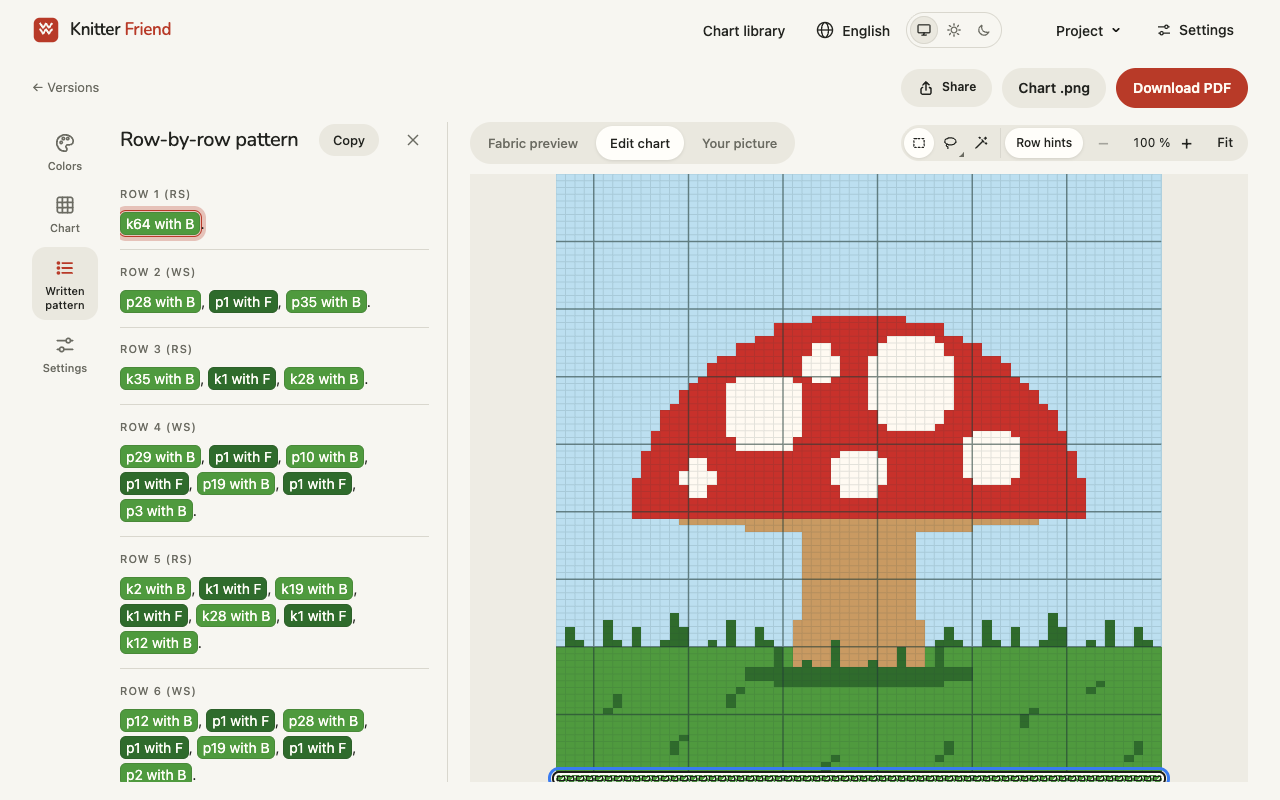
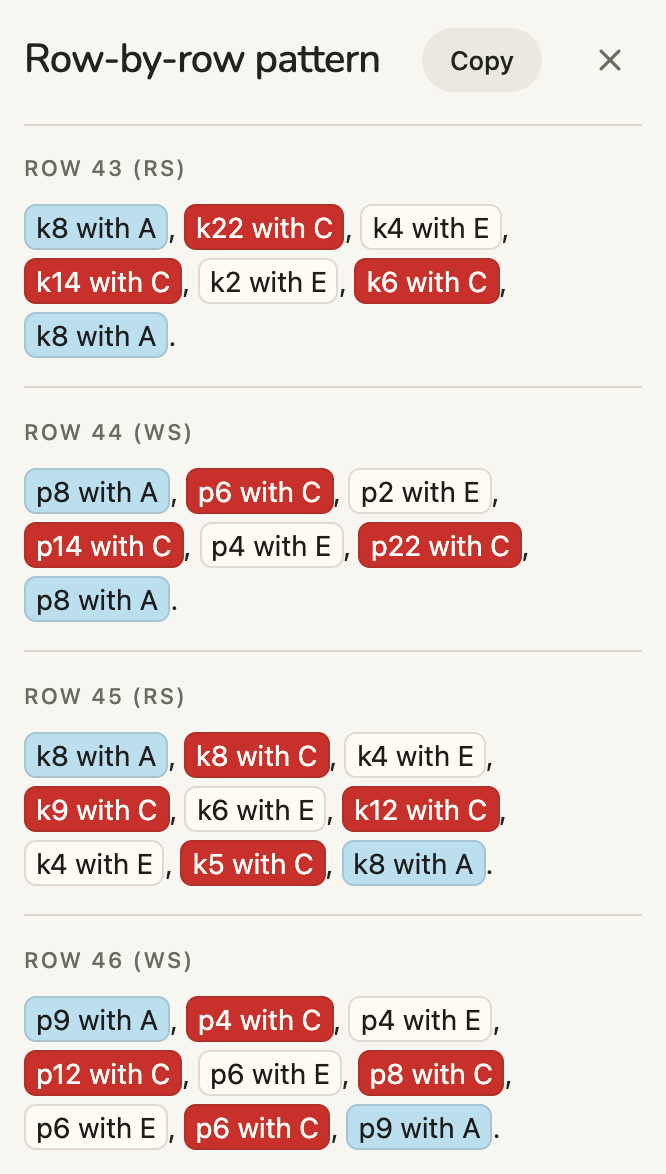
Inspect each chart row for long distances between uses of the same color, including where repeats meet. In Knitter Friend, you can compare versions with fewer colors and recolor selected stitches to simplify the motif. Removing isolated details or bringing recurring shapes closer can shorten or eliminate a difficult carry. Fewer colors alone do not guarantee shorter floats: merging shades can also remove intervening color changes. Recheck the edited rows yourself and plan the catches separately. The picture-to-chart guide covers the chart and color editing workflow.
Knit a sample with the longest gaps, a repeat boundary and the planned catch positions, using the same yarns and flat or circular method as the project. Wash and dry it as you will the finished piece, then examine both sides and gently check the stretch again. Measure stitches and rows over 10 cm (about 4 in), following the gauge swatch guide. Keep the chart, yarn arrangement and catch notes together. If the sample still puckers or snags, adjust the tension, catches or design before continuing with the full piece.